

Fine-tuning your child’s smile takes three things: time, patience, and a personalized treatment plan that addresses your unique needs and smile goals. Most patients expect that their treatment plans will include a few years of wearing braces or Invisalign, but Dr. Wedding and Dr. Thompson use various tools to help give your child the grin they deserve.
One of these tools is a palatal expander, which can address narrow palates and allow more room for adult teeth to grow in your child’s mouth. If you just met with Dr. Wedding or Dr. Thompson, and they told you that your child needs a palatal expander, you’re in the right place. Here’s everything you need to know about palatal expanders so you can help your child get the care they need.
What is a palatal expander?
When you’re a kid, the bones in your mouth change and develop rapidly. You’re losing teeth, gaining teeth, and growing into a young adult. With all that change, your orthodontist has a lot of work to do to get your teeth in top shape!
While a child’s mouth is developing, the jaws don’t always grow to allow the teeth to fit correctly. Sometimes, this improper growth causes jaw misalignment. Other times, it causes a narrow palate. This condition makes their upper jaw too small to support a full set of teeth which can cause a crowded or crooked smile. If your child has a narrow palate, Dr. Wedding or Dr. Thompson might recommend a palatal expander.
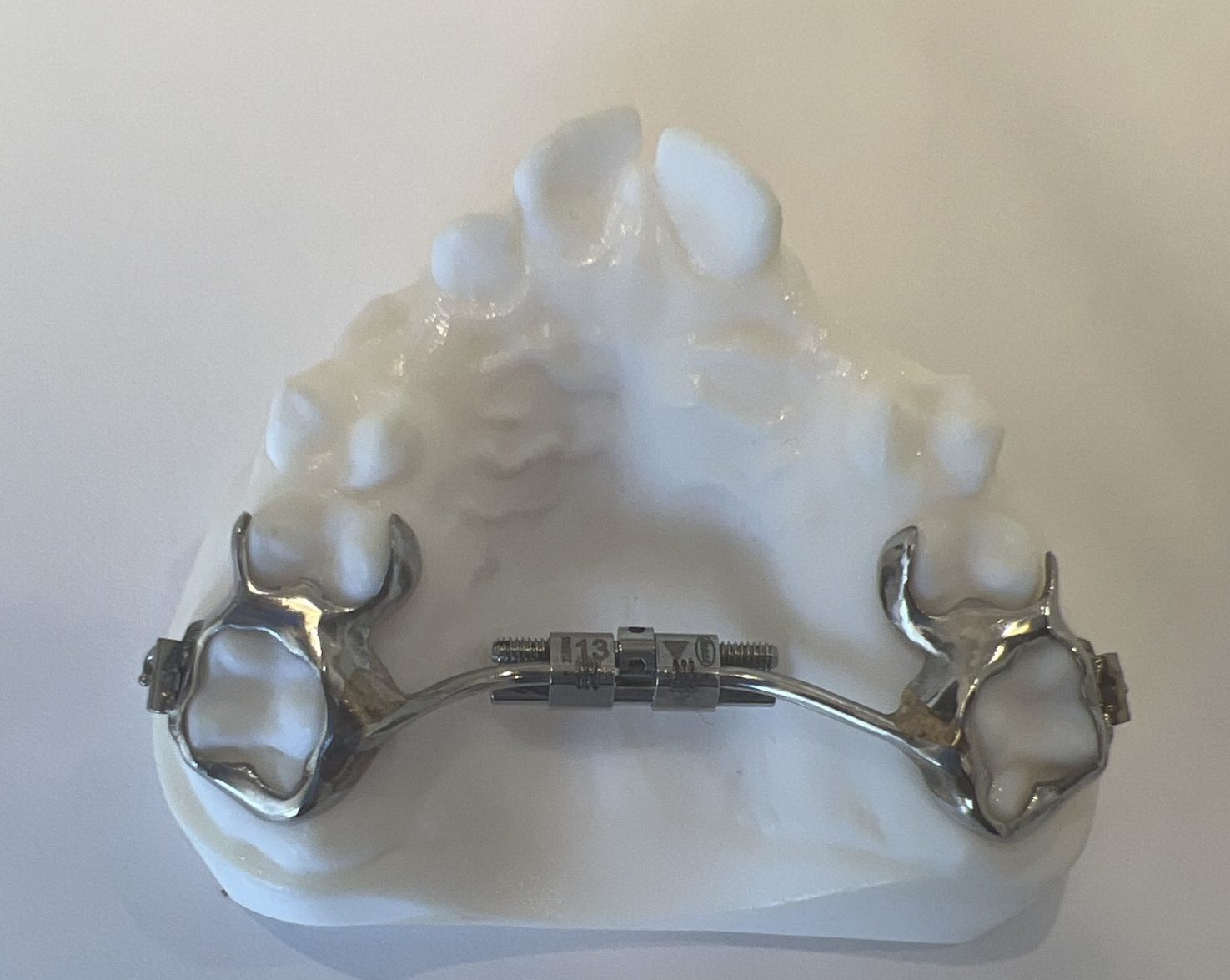
A palatal expander is an extremely useful orthodontic tool that helps expand the upper jaw to allow more room for a child’s teeth to grow appropriately. This tool is attached to the top teeth and fits on the roof of your child’s mouth. By taking advantage of your child’s natural jaw growth and development, a palatal expander gently applies pressure that broadens the narrow palate over time.
What causes a narrow palate?
Just like with any orthodontic condition, there are several possible reasons your child may develop a narrow palate that requires the help of a palatal expander.
Genetics: If you had a narrow palate when you were younger, your child might also have a narrow palate. This condition can be inherited from parents, so it’s a good idea to keep an eye out if it runs in the family.
Tongue-Tie: As many as 16% of children are born with a tongue-tie, which is when the section of tissue that connects their tongue to the bottom of their mouth is shorter than average. Tongue-ties restrict the tongue’s range of movement, so it cannot exert as much force against the palate. Without the tongue’s pressure against the roof of their mouth, they could develop a narrow palate.
Thumb-Sucking: Children who suck their thumbs past the age of four or five are susceptible to developing a narrow palate. Because their thumbs apply pressure to the roof of their mouth, this pressure could cause a high arch that narrows the top jaw. If your child has a thumb-sucking habit, you may want to bring them in for a consultation to avoid or address damage to their palate.
How does a palatal expander work?
Once Dr. Wedding or Dr. Thompson attaches the palatal expander to your child’s teeth, the tool requires minimal maintenance to start working. Palatal expanders are patient-friendly and so easy to adjust that you can do it at home! Your expander should be tightened once every few days, depending on the doctor’s advice.
When our team attaches the palatal expander to your child’s teeth, they’ll give them a special adjustment tool and a tightening schedule. This tool looks and works like a key. To adjust the appliance as directed, your child will simply insert the key into the hole in the middle of the device and turn. After three to six months of treatment, you’ll see a noticeable change that will make a huge difference in your child’s smile.
Your child may feel slight discomfort when they tighten their expander, but these adjustments are much milder than the kind you get at your regular braces appointment at our office. They’ll hardly feel a difference.
What to expect in the first few days
Most kids get used to their expander pretty quickly. In the first few days, it’s normal for your child to talk a little differently, have a bit of extra saliva and prefer softer foods while they get used to the feel of it. As the expander does its job, you may also notice a small gap opening up between the two front teeth. That’s a good sign the palate is widening, and it’s something Dr. Wedding and Dr. Thompson plan for as treatment moves forward.
How do I know if my child needs a palatal expander?
Palatal expanders work best for younger patients whose mouths are still growing. That’s because the palate of your child’s mouth is made of two separate bones that meet in the middle. When a person reaches puberty, these bones fuse together. Until then, they are pliable, and that’s where expanders come in.
The flexibility of these bones allows a palatal expander to work with your child’s natural growth. As the tool gently pushes the bones away from one another, new bone grows to fill in the space and voila! Your child has a wider palate and more space in their mouth for their teeth to line up properly.
Here are a few signs of a narrow palate to watch for at home.
- Crowded or overlapping teeth, especially as adult teeth start coming in
- Adult teeth that don’t seem to have enough room to come in
- A crossbite, where some upper teeth sit inside the lower teeth when your child bites down
- An upper arch that looks narrow or V-shaped instead of rounded
- A thumb-sucking habit that has lasted past age four or five
Toddlers are usually too young for an expander, but if you notice a narrow palate early, it’s worth mentioning at their next dental visit. Expanders are often one part of a bigger early treatment plan, and our page on kids braces walks through what that can look like for your child.
If you’re worried about your child’s smile, the best thing you can do is bring them in for an appointment with Dr. Wedding or Dr. Thompson at Wedding Thompson Orthodontics. The earlier we check for signs of a narrow palate, the more likely we can address the issue or even prevent the need for additional care.
Palatal Expander FAQs
How does a palatal expander work?
A palatal expander attaches to the top teeth and sits against the roof of the mouth. Turning it with a small key on the schedule your orthodontist gives you gently widens the two bones of the upper jaw, and new bone fills in the space as they separate.
How do I know if my child needs a palatal expander?
Crowded teeth, a crossbite, adult teeth without enough room to come in and a narrow upper arch can all point to a narrow palate. An orthodontic visit is the best way to know for sure, and the American Association of Orthodontists recommends one by age 7.
Does a palatal expander hurt?
Most kids feel slight pressure when the expander is turned, but it’s much milder than a regular braces adjustment. Any discomfort usually passes quickly.
How long does a child wear a palatal expander?
Most kids see a noticeable difference after three to six months of treatment. Your orthodontist will let you know how long the expander should stay in based on your child’s plan.

Give Your Child the Best Care Possible
Having a narrow palate can cause your child’s smile to appear crooked or crowded, making them feel self-conscious or even develop issues with eating or speaking. To set your child up for success, bring them into their first orthodontic visit by their 7th birthday, and the Wedding Thompson Orthodontics team will give them the smile they deserve.
If you haven’t yet, schedule a free consultation in Owensboro today to give your child the best care possible!