
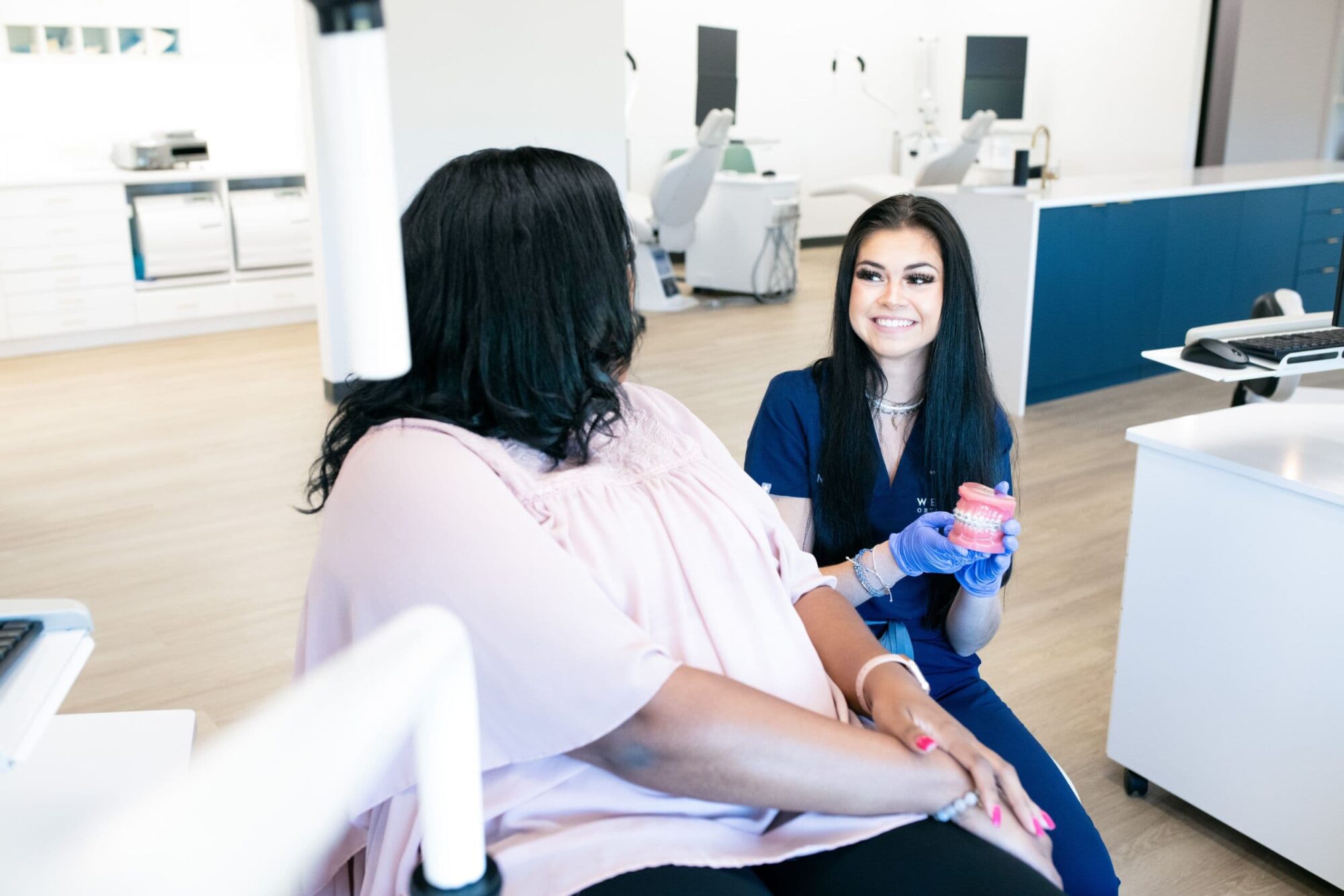
Living with braces comes down to three habits: eating carefully, cleaning thoroughly, and handling small problems as they pop up. You’ll swap hard and sticky foods for braces-friendly choices, brush after every meal and floss once a day, and manage issues like a poking wire with orthodontic wax. Most people settle into the routine within two weeks. At Wedding Thompson Orthodontics, the first stretch of treatment is the part patients ask about most, so here’s the full picture of what daily life actually looks like.
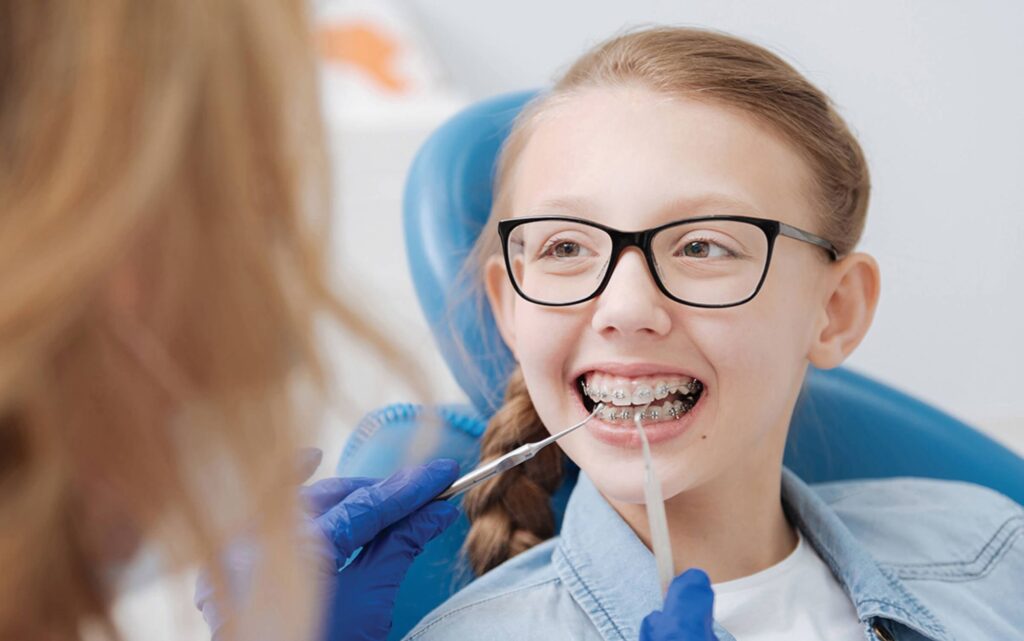
What Is Living With Braces Really Like?
What Do the First Few Days With Braces Feel Like?
Your lips, cheeks, and tongue need a little time to adjust to the new hardware. For the first three to seven days, expect some tenderness when you chew and maybe a rubbed spot or two inside your cheeks. Soft foods and orthodontic wax handle almost all of it.
That tenderness fades. By the end of week one, most patients forget the brackets are there until they catch a glimpse in the mirror.
What Does the Long Haul Actually Look Like?
Most braces treatment runs somewhere between 12 and 30 months, depending on how far your teeth and bite need to move. Treatment length varies quite a bit from person to person based on the correction required, so a friend’s timeline isn’t a reliable preview of yours. You’ll come in for a check-up roughly every 6 to 10 weeks so Dr. Justin Wedding or Dr. Sam Thompson can adjust wires, swap elastics, and track progress.
Here’s the part that surprises people: your daily life barely changes. You still play sports, sing in the choir, eat lunch with friends, and take photos. The two real shifts are what goes on your plate and how long you spend at the sink.
What Should I Buy on Day One?
- Orthodontic wax. Covers any bracket that’s rubbing.
- A travel brush kit. Toothbrush, small tube of paste, floss threaders, and a compact mirror in a pouch you keep in your backpack, purse, or truck.
- Braces-friendly snacks. Yogurt, string cheese, bananas, soft granola, applesauce, smoothies.
Stock those three and the transition gets a whole lot smoother. Keep the wax somewhere you’ll actually reach for it, too, because a rubbing bracket at nine o’clock at night is far easier to solve when the tin is in your pocket instead of buried in a bathroom drawer at home.
Living With Braces: Eating and Cleaning Every Day
Your daily routine with braces takes only a few extra minutes. Brush for two full minutes after every meal, angling the bristles above and below each bracket. Floss once a day with a threader or water flosser. Cut food into small pieces and chew with your back teeth instead of biting down in front.
How Do I Brush With Braces?
- Rinse first. A quick swish of water loosens food stuck around the wire.
- Angle down at 45 degrees above the brackets, then flip and angle up from below. Brackets have edges that trap plaque, and straight-on brushing skips them.
- Brush the chewing surfaces and the inside of every tooth. The tongue side gets forgotten constantly.
- Go for two minutes. Set a timer on your phone if you tend to rush.
- Brush after every meal, not just morning and night. That’s the single habit that separates a bright smile at debonding from a spotty one.
How Do I Floss With Braces?
Flossing takes practice, then it takes about three minutes. Pick whichever tool you’ll actually use:
- Floss threaders pull regular floss under the wire so you can clean between each pair of teeth.
- Pre-threaded orthodontic flossers are faster and travel well.
- A water flosser blasts out debris around brackets and works great for anyone who dreads threading.
- Interdental brushes (tiny cone-shaped brushes) slide under the wire and between brackets where a regular toothbrush can’t reach.
Do it once a day, ideally at night. Your gums will show the difference at your next check-up.
How Do I Eat With Braces Without Breaking Anything?
- Cut it up. Apples, corn, pizza crust, sandwiches, and chicken on the bone all become safe once they’re sliced into small pieces.
- Chew with your molars. Biting straight into food with your front teeth is how most brackets pop off.
- Slow down. Fast eating and hard bites don’t mix with orthodontic hardware.
- Rinse after sugary or acidic drinks. Soda, sweet tea, sports drinks, and juice leave sugar sitting around your brackets, which is exactly how white spots (decalcification) start. Water after, brush when you can.
Do I Need to Keep a Kit With Me?
Travel toothbrush. Floss threaders. Orthodontic wax. Small mirror. Toss it in your bag and you’ll never have to sit through a whole afternoon with spinach in your brackets.
Why Do Good Braces Habits Pay Off?
Every habit above buys you something concrete: a shorter treatment, healthier enamel, and easier check-ups.
Fewer repairs mean a faster finish. When a bracket breaks, that tooth stops moving until we fix it. String a few of those together and you’ve added weeks to your total treatment time. Careful eating keeps you on schedule.
Clean teeth stay clean underneath. Plaque left around brackets can leave permanent white marks on enamel and inflame your gums. Brushing after meals prevents both. Nobody wants to finish 18 months of work and discover a chalky outline where each bracket used to sit.
Elastics only work when they’re in. Rubber bands correct how your upper and lower teeth meet, and they need consistent hours to do it. Skipping days is the most common reason bite correction falls behind.
Adjustments go quicker. Healthy gums and clean brackets make wire changes faster and more comfortable, which means less time in the chair for you.
The habits stick. Plenty of our patients tell us they kept flossing nightly long after their braces came off. That’s a lifetime win hiding inside a temporary inconvenience. It also makes the retainer phase easier, and caring for a retainer is its own small routine once the brackets come off.
Braces-Safe Foods vs. Foods to Avoid
Two rules cover almost everything: nothing hard enough to crack a bracket, nothing sticky enough to pull one off.
| Eat Freely | Skip Until Debonding |
|---|---|
| Soft breads, tortillas, pancakes | Hard candy, jawbreakers, lollipops |
| Pasta, rice, soft grains | Ice (chewing it, not drinking around it) |
| Yogurt, pudding, smoothies, ice cream | Nuts and hard seeds |
| Soft cheese and string cheese | Popcorn (kernels and hulls both) |
| Bananas, berries, melon, sliced fruit | Caramel, taffy, gummy candy |
| Cooked vegetables, mashed potatoes | Chewing gum |
| Eggs, fish, tender chicken, ground meat | Hard pretzels, crusty baguettes, tortilla chips |
| Soup, oatmeal, applesauce | Beef jerky and tough cuts of meat |
Which Foods Can I Cut Up and Still Eat?
Some favorites are back on the menu with a knife. Slice corn off the cob. Cut apples and pears into thin wedges. Shred raw carrots or cook them soft. Pull chicken off the bone. Break a sandwich into small bites instead of taking a big front-tooth chomp.
What About Drinks?
Sugary sodas and sports drinks bathe your brackets in acid and sugar. Since braces already give plaque more places to hide, that combination raises decay risk. Water is the safest thing to drink during treatment. If you do have something sweet, rinse afterward.
Does the Food List Change by Treatment Type?
- Metal braces: the strongest option, but the food list above applies fully. Brackets and wires can bend or break under hard pressure.
- Clear braces: same eating rules, plus a note on staining. The ceramic brackets themselves resist stains, though the clear ties holding the wire can pick up color from coffee, curry, and tomato sauce. Those ties get replaced at every check-up.
- Invisalign: you remove the aligners to eat, so there’s no food list at all. The trade-off is discipline. Aligners need 20 to 22 hours of wear daily, and you brush before putting them back in. Wedding Thompson Orthodontics is a diamond plus Invisalign provider, which means more experience treating patients with Invisalign than 99% of other orthodontists, so Dr. Wedding and Dr. Thompson can tell you honestly which option fits your case and your habits.
Parents sorting through these options for a teenager will find more detail in our guide to braces for teens.
Handling Common Problems: What to Fix at Home vs. Call Us
Most braces hiccups are small and solvable at your bathroom sink. A few need us, and we’d always rather hear from you than have you sit there guessing.
What Can I Fix at Home?
Soreness after an adjustment. Stick to soft foods for a day or two, sip cold water, and use an over-the-counter medication you normally take if you need it. Tenderness usually eases within a few days.
A poking wire. Use the eraser end of a pencil or a cotton swab to tuck the wire back behind the bracket. If it won’t cooperate, cover the end with orthodontic wax. Clipping a wire yourself is a last resort, and only if it’s truly unbearable.
A loose bracket. Leave it on the wire. Slide it back into position if it has spun around, cover it with wax, and call us to schedule a repair. Pulling it off makes the fix harder.
Cheek or lip sores. Rinse with warm salt water a few times a day and put wax over whichever bracket is doing the rubbing. These spots toughen up fast.
A lost elastic or ligature. Replace the elastic and keep wearing your bands on schedule. Mention the missing ligature (the small colored tie) at your next check-up.
Food stuck under the wire. Interdental brush, water flosser, or a threader. Don’t dig at it with anything metal.
When Should I Call the Office Right Away?
- Swelling in your face, gums, or jaw
- Any injury or trauma to your mouth, such as a sports impact or fall
- A wire that has come completely out of the brackets or is jabbing hard enough to draw blood
- A broken appliance you can’t stabilize with wax
- Soreness that keeps getting worse instead of better after several days
Call the office and we’ll get you in for a repair as soon as we can. Call before you improvise. A five-minute fix in our chair beats a workaround that costs you treatment time.
Frequently Asked Questions About Living With Braces
How long does soreness last after an adjustment?
Most patients feel tenderness for one to three days after a wire change, and it’s usually mildest by day two. Soft foods, cold water, and an over-the-counter medication you normally use will carry you through. Soreness that intensifies after several days is worth a phone call.
Can I chew gum with braces?
No. Gum sticks to brackets and wires, and pulling it free can loosen a bracket or bend a wire out of position. Sugar-free gum is no safer, since the problem is the texture, not the sugar. Save it for after debonding.
What happens if I break a bracket?
Leave the bracket on the wire, cover it with orthodontic wax if it’s rubbing, and call us to schedule a repair. That tooth pauses its movement until the bracket is re-bonded, so the sooner we see you, the less time it adds to your treatment.
How do I floss with braces quickly?
Pre-threaded orthodontic flossers cut the job down to a couple of minutes because you skip the threading step. A water flosser is even faster and handles debris around brackets well. Whichever you choose, once daily is the target, and doing it every day matters more than doing it perfectly.
Can I drink coffee or soda with braces?
Yes, with a few precautions. Rinse with water afterward to clear sugar and acid away from your brackets, and brush when you can. Coffee, tea, and dark sodas can tint the clear elastic ties on clear braces, though we replace those at every check-up.
Do I still need regular dental cleanings during treatment?
Absolutely. The American Association of Orthodontists advises patients in braces to keep seeing their general dentist for routine cleanings and exams throughout treatment. Brackets create more spots for plaque to hide, which makes professional cleanings more valuable, not less. Keep those visits on the calendar the same way you keep your check-ups here.
Will braces change how I talk or eat in public?
For a few days, maybe. Your tongue adapts quickly, and speech is usually back to normal within a week. Eating in public gets easier once you know your safe foods and keep a travel brush kit handy.
Braces are a temporary routine with a permanent payoff. Dr. Justin Wedding and Dr. Sam Thompson can walk you through what daily life realistically looks like with metal braces, clear braces, or Invisalign, and our team will make sure you know exactly how to care for your smile from the day the brackets go on. These are not your father’s braces. The eating rules, the brushing routine, and the small fixes above are the whole assignment, and two weeks in, most patients tell us it already feels automatic.